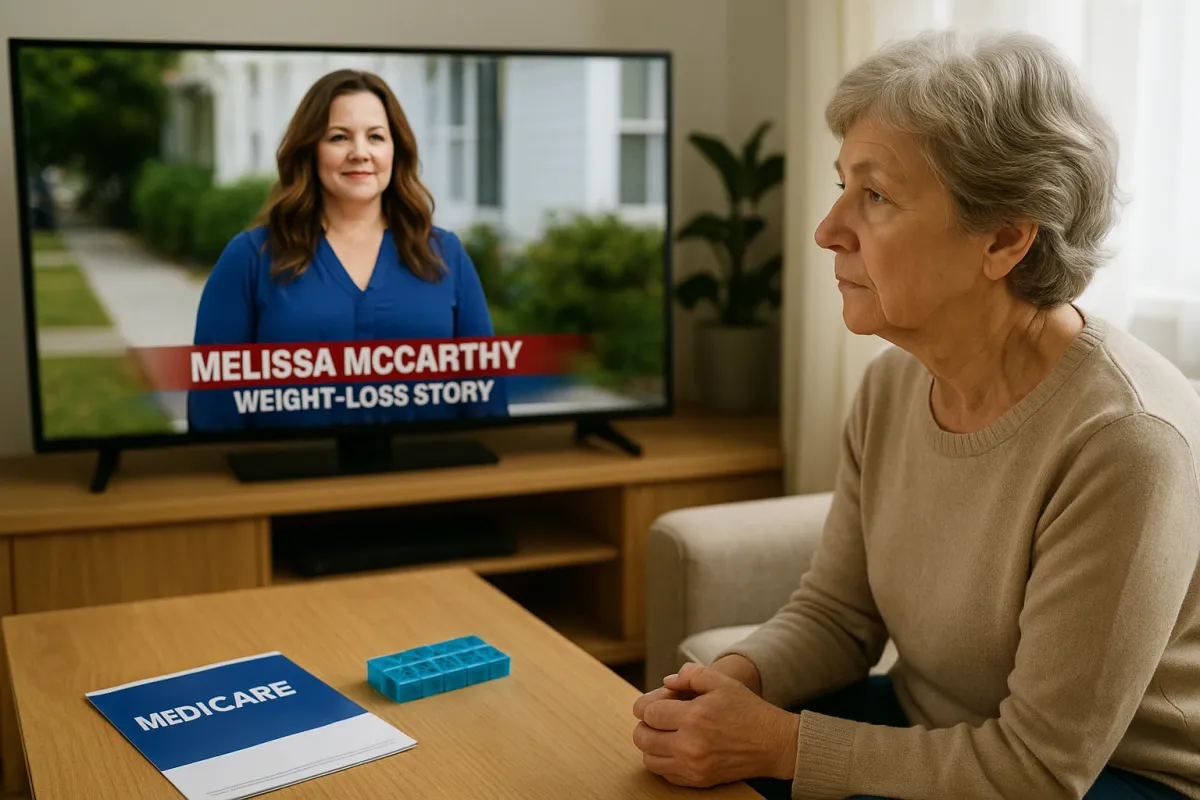
Melissa McCarthy’s recent “Saturday Night Live” appearance, revealing a dramatic 95‑pound weight loss, has ignited exactly the kind of public conversation we’ve come to expect in 2025: admiration, speculation, and a laser‑focus on one question—did she use weight‑loss injections? Barbra Streisand’s now‑viral comment wondering aloud about Ozempic‑style help crystallized what many were already thinking. These moments are more than gossip; they are cultural signals that the center of gravity in weight loss has shifted from willpower and diets to medical programs and prescription therapies.
For Medicare beneficiaries, that shift is not merely interesting—it is strategic. When the headlines obsess over celebrity “before and after” photos and GLP‑1 agonists like semaglutide (Ozempic, Wegovy) and tirzepatide (Mounjaro, Zepbound), the real question becomes: what does a medically elegant, safe, and sustainable weight‑loss program look like when you are over 65—or living with chronic conditions—and navigating the rules of Medicare?
Below are five refined, quietly powerful insights to help you evaluate weight‑loss programs in the current, celebrity‑driven era of injections and “instant” transformations.
1. The Celebrity Ozempic Era Masks a Crucial Distinction: Diabetes Treatment vs. Weight‑Loss Therapy
The public conversation around Melissa McCarthy’s transformation—and the speculation sparked by Barbra Streisand’s comment—tends to blur lines between medications used for diabetes and those specifically approved for obesity. In reality, Medicare and most insurers treat them very differently.
Semaglutide as Ozempic is FDA‑approved for type 2 diabetes. Semaglutide as Wegovy is FDA‑approved for chronic weight management. Mounjaro and Zepbound follow a similar pattern with tirzepatide. For Medicare beneficiaries, this distinction is not academic—it’s financial. Traditional Medicare currently covers GLP‑1 medications only when they are prescribed for diabetes, not purely for obesity, though many Medicare Advantage plans are now experimenting with selective coverage, prior authorizations, or value‑based programs.
Before you commit to a program that emphasizes “access to the latest injections,” ask three deliberately precise questions:
– Is this medication being prescribed for a diagnosis Medicare actually covers?
– Is the weight‑loss program transparent about which part of the treatment is billable to Medicare vs. out‑of‑pocket?
– If your physician stopped the medication tomorrow, what is the formal maintenance plan—beyond inspirational success stories?
Sophisticated care does not promise a celebrity‑style reveal. It designs a medical path that respects the difference between pharmacologic assistance and lifestyle architecture, and it’s completely explicit about how those choices interact with Medicare rules.
2. A Premium Weight‑Loss Program for Older Adults Starts With Risk—Not With the Scale
When the conversation focuses on stunning visual changes—like McCarthy’s 95‑pound loss—the nuance that vanishes first is risk stratification. For Medicare beneficiaries, a premium weight‑loss program never begins with “How much can we get off?” It begins with “What can your body safely afford to change—and at what pace?”
A program designed for a 30‑year‑old with no medical history is not equivalent to one built for a 72‑year‑old with atrial fibrillation, osteopenia, and a long medication list. Thoughtful clinicians start by auditing:
– Cardiac risk (including rhythm, blood pressure, heart failure history)
– Bone density, sarcopenia risk, and frailty markers
– Cognitive status and fall risk
– Polypharmacy (particularly blood pressure, glucose, and anticoagulation therapies)
– Prior weight‑loss attempts and history of rapid regain
If a program leaps straight to injections, meal replacements, or severe calorie targets without a formal medical risk review, that is not premium—it is simply polished. Elegant care for Medicare beneficiaries often recommends gentler initial goals, resistance‑training‑centered plans to protect muscle, and closer monitoring intervals for blood pressure and glucose. A truly refined program will happily say “slower is safer, and therefore better” even when the culture is spellbound by overnight transformations.
3. Muscle Preservation Is the New Luxury—And It Should Be Programmed In Writing
Public fascination with celebrity slim‑downs rarely mentions what clinicians quietly worry about: loss of lean muscle mass. Rapid loss—whether achieved via crash dieting or GLP‑1 injections—can be remarkably unforgiving after age 60, when sarcopenia (age‑related muscle loss) is already a threat. Once a certain amount of muscle is gone, regaining it is possible, but the process is slower and more demanding.
A Medicare‑savvy weight‑loss program should include a formal, written muscle‑preservation strategy, not simply “light exercise as tolerated.” At minimum, ask whether the program provides:
– A resistance‑training plan tailored to your joints, balance, and cardiac status
– A clear protein target per day, adjusted for kidney function
– Baseline and follow‑up tracking of strength or functional capacity (for example, grip strength, sit‑to‑stand testing, or gait speed)
– Guidance on safely integrating physical therapy or supervised fitness if you have mobility limitations
If your clinician or program director cannot describe, in practical detail, how they will help you lose fat while preserving strength, they are not offering a contemporary, medically elegant program—no matter how glossy the marketing may look. For older adults, muscle is the most underrated luxury asset; your future independence depends on it.
4. Emotional Glamour Sells Fast; Psychological Support Protects You Long‑Term
Melissa McCarthy’s transformation has been framed as inspirational, even liberating—and for many, it is. Yet behind every highly public success story is a quiet psychological terrain that never makes headlines: identity shifts, social expectations, family reactions, and the unsettling reality of inhabiting a very different body, sometimes in a very short time.
For Medicare beneficiaries, this dimension is often more complex. Retirements, caregiving roles, bereavements, and social isolation can all shape eating behavior and motivation in ways injections cannot fix. A mature weight‑loss program should therefore treat emotional health as a formal pillar, not an afterthought. Look for:
– Scheduled access to a behavioral health professional with experience in obesity medicine or chronic disease
– Structured coaching or group sessions that address habits, emotional eating, and social triggers
– Screening for depression, anxiety, and cognitive challenges before aggressive weight‑loss plans are launched
– A clear process for adjusting or pausing the program if psychological strain escalates
If a program dwells on “confidence,” “glow ups,” or “finding your best self” but does not budget time, billing codes, or real clinical attention for the underlying emotional work, it is closer to entertainment than healthcare. In 2025, a truly premium program treats your mental landscape with the same precision it applies to your lab work.
5. A Medicare‑Aligned Plan Thinks Beyond This Year’s Injections—and Anticipates Policy Change
The controversies swirling around celebrity transformations and GLP‑1 medications are already feeding into policy debates in Washington and among major insurers. As the cost of these therapies weighs on public budgets, Medicaid programs and some commercial plans are tightening access, while advocacy groups push for broader coverage of obesity as a chronic disease. Medicare beneficiaries sit in the middle of this evolving conversation.
This is where a genuinely strategic weight‑loss program distinguishes itself: it assumes that coverage rules for medications, nutritional counseling, and telehealth support might change during your journey—and plans accordingly. When you evaluate a program, ask:
– How would my plan adapt if GLP‑1 coverage were reduced, denied, or time‑limited?
– Is the program building durable, lifestyle‑based scaffolding from day one, or is medication doing nearly all the work?
– Are we taking advantage of currently covered services (like medical nutrition therapy for diabetes or kidney disease, or intensive behavioral therapy for obesity in eligible patients) rather than ignoring them in favor of cash‑pay options?
– Does the clinic or program have experience appealing denials or navigating Medicare Advantage prior authorizations?
The quiet hallmark of a premium, Medicare‑aware program is not just access to today’s fashionable therapies; it is its resilience when the policy winds shift. Your plan should be built so that—regardless of what happens in the headlines—your progress remains grounded in habits, strength, and medical stability rather than in any single prescription.
Conclusion
Celebrity moments like Melissa McCarthy’s SNL reveal and Barbra Streisand’s candid speculation may seem far removed from the daily realities of Medicare. Yet they signal a profound transition: weight‑loss programs are no longer judged only by diet plans and gym memberships, but by their command of advanced medications, nuanced risk management, and long‑term strategy.
For Medicare beneficiaries, the real luxury is not rapid transformation—it is curated, medically literate progress that respects your age, your comorbidities, and your future independence. Seek programs that understand the difference between spectacle and stewardship: those that protect your muscle as carefully as they lower your weight, design psychologically supportive paths rather than quick fixes, and anticipate shifts in Medicare coverage instead of reacting to them in panic.
In a culture obsessed with before‑and‑after images, your task is elegantly simple: choose a program that is ready for every “after” you care about—walking confidently, thinking clearly, living independently—not just a smaller number on the scale.
Key Takeaway
The most important thing to remember from this article is that this information can change how you think about Weight Loss Programs.